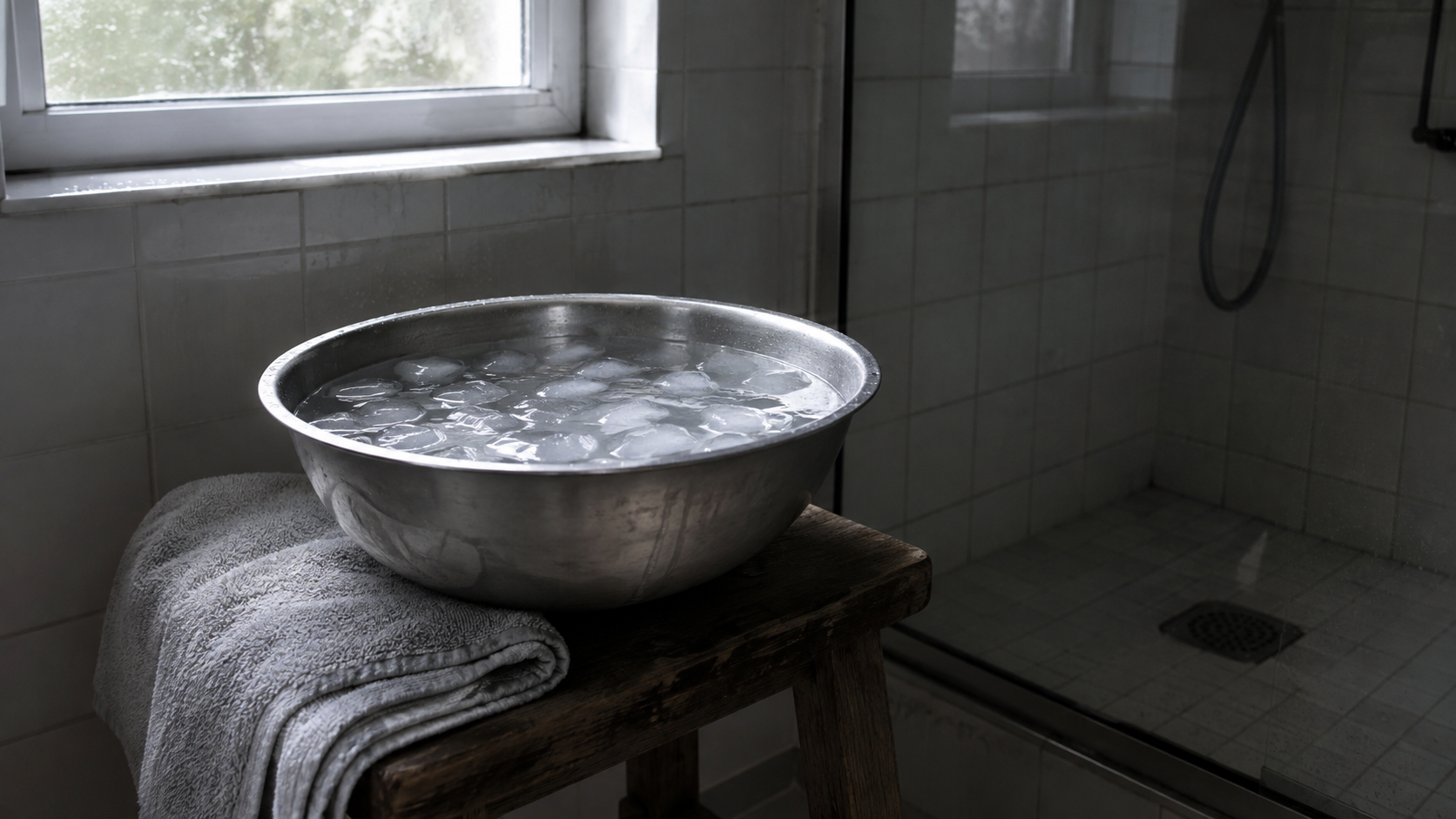
Cold water immersion has become one of the most promoted wellness practices in the past five years. Social media is filled with claims that cold showers and ice baths boost immunity, burn fat, cure depression, increase testosterone, and extend your lifespan. Some of these claims have research behind them. Most do not. And the distinction matters if you are deciding whether to make this a regular practice.
What the Research Actually Supports
The strongest evidence for cold water exposure is in the domain of mood and mental alertness. A 2000 study by Šrámek and colleagues found that immersion in 14°C water for one hour increased metabolic rate by 350 percent and dopamine levels by 250 percent. The dopamine increase lasted for several hours after exiting the water. This is a large and sustained effect, comparable to some pharmacological interventions.
A 2023 systematic review in the British Journal of Sports Medicine examined 104 studies on cold water immersion and found consistent evidence for improvements in self-reported mood, alertness, and vigor. The reviewers noted that the evidence quality was moderate and that placebo effects could not be ruled out in many studies, but the consistency of the mood effect across different study designs was notable.
The mechanism is relatively straightforward. Cold exposure activates the sympathetic nervous system, triggering a release of norepinephrine and dopamine. Norepinephrine increases alertness and focus. Dopamine improves mood and motivation. The combination produces the “energized and clear-headed” feeling that cold plunge enthusiasts describe, and this part of the experience is well-supported by physiology.
Where the Evidence Gets Weaker
The claims about cold exposure boosting the immune system are based on a small number of studies with significant limitations. The most frequently cited is the 2016 study by Buijze and colleagues in the Netherlands, which found that people who ended their daily showers with 30 to 90 seconds of cold water had a 29 percent reduction in sickness absence from work. However, the study measured self-reported sick days, not actual immune markers. People who voluntarily take cold showers may also differ in other health behaviors that explain the result.
Studies measuring actual immune markers after cold exposure show mixed results. Some find temporary increases in white blood cell counts and natural killer cell activity. Others find no significant changes. A 2022 review in the Journal of Thermal Biology concluded that “chronic cold water exposure may have immunostimulating effects, but the evidence is insufficient to make definitive claims.”
The fat-burning claims are technically true but practically irrelevant. Cold exposure does activate brown adipose tissue, which burns calories to generate heat. A 2014 study by van der Lans found that cold acclimation increased brown fat activity by about 45 percent. But the total additional calorie burn from this process amounts to roughly 100 to 200 extra calories per day, about the equivalent of walking for 20 minutes. It is not a meaningful weight loss strategy.
The Recovery Debate
Perhaps the most contentious area is athletic recovery. Ice baths after exercise have been standard practice in many sports for decades, but the research has become increasingly skeptical of this application.
A landmark 2015 study by Roberts and colleagues in the Journal of Physiology found that cold water immersion after strength training actually blunted muscle growth and strength gains compared to active recovery. The cold reduced the inflammatory response that is necessary for muscle adaptation. In other words, the thing that made athletes feel better in the short term was undermining their long-term training adaptations.
This finding has been replicated multiple times. A 2021 meta-analysis confirmed that post-exercise cold water immersion reduces muscle soreness but also reduces muscle protein synthesis, hypertrophy, and strength gains. For endurance athletes, the effect is less clear-cut, with some studies showing benefits for repeated same-day performance.
The emerging consensus is that cold water immersion can be useful for recovery when athletes need to perform again within hours, such as between tournament games, but is counterproductive as a routine post-training recovery tool for anyone trying to build strength or muscle.
What a Reasonable Protocol Looks Like
If you want to incorporate cold exposure based on what the evidence supports, the research suggests a few guidelines. For mood and alertness, the effective dose appears to be 1 to 3 minutes at 10 to 15°C, or about 50 to 59°F. Longer is not necessarily better. The dopamine and norepinephrine response is triggered within the first minute and does not scale linearly with duration.
Timing matters. Cold exposure in the morning takes advantage of your body’s natural cortisol peak and the alertness-promoting effects of norepinephrine. Cold exposure immediately after strength training should be avoided if muscle growth is a goal. A gap of at least four hours between training and cold exposure appears to mitigate the negative effects on adaptation.
Consistency matters more than intensity. The Dutch study found benefits from as little as 30 seconds of cold water at the end of a regular shower. You do not need an ice bath at 2°C to get the mood effects. The discomfort itself appears to be the primary trigger, and moderate cold that you can sustain consistently will produce better results than extreme cold that you abandon after two weeks.
The Bottom Line
Cold water exposure has one strong, evidence-based benefit: improved mood and alertness through dopamine and norepinephrine release. This benefit is real, reproducible, and meaningful for daily quality of life.
The claims about immunity, fat loss, testosterone, and longevity range from weakly supported to unsupported. And the traditional use of ice baths for athletic recovery is increasingly contradicted by research showing it impairs the training adaptations you are working to build.
As with most wellness practices, the truth is less dramatic than the marketing. But a 60-second cold shower for a sustained mood boost is a genuinely useful tool, as long as you are clear about what it does and does not do.